I Thought Powder Pigments Were a Scam
Then I realized the problem was me…
What Is Tattoo Ink?
There was a period of my life where I worked inside a tattoo museum that also operated as a tattoo shop.
When I wasn’t tattooing, I’d wander around staring at old machines, and antique tattoo artifacts sitting in glass display cases. It was really cool.
But one day I looked up close at an old glass bottle- probably from around the 1930s by the look- and actually read it. It said:
“Green Tattoo Ink — Phthalocyanine”
That caught me off guard. Like, is “Phthalocyanine” just a made-up word? Could that be related to the “Phthalo Blue” that I heard Bob Ross mention so many times in “The Joy of Painting”? The bottle still had some clumped-up Emerald Green powder in it and I remember writing that strange word on a piece of paper so I could look it up later.
That weekend I went down a rabbit hole. I Googled it and learned. Then I returned to work and looked at the labels on my own inks.
Then I realized something that sounds obvious now but completely changed the way I looked at tattooing: there are actual answers to the question:
“What is in tattoo ink?”
Oddly enough, I discovered that many of those answers weren't coming from Tattooing itself.
They were coming from websites of: pigment manufacturers, chemical suppliers, technical sheets, and industrial applications. Sites like Epsilon Pigments, Precise Chemical, various Material Safety Data Sheets (MSDS), and Chemical index databases.
The deeper I looked, the more I realized I had been asking tattooers questions that chemists had already answered years ago.
So I went back to work and started writing everything down. Every labeled pigment, every CI number, and every color recipe from every tattoo ink brand that I could find.
When a bottle didn’t list its ingredients, I hunted through old MSD sheets and manufacturer information trying to figure out what was actually inside or I just bought it in order to read the label on the side.
After awhile I started noticing patterns like:
-Certain pigments behaved similarly regardless of the company
-Certain colors always seemed difficult to use
-Certain similar hues were created using the same combinations of pigments
For a specific example, I started noticing that colors built around Quinacridone Magenta often seemed troublesome to pack- regardless of brand. I learned later that it was not because one company was better or worse, but because transparent pigments (like Magenta) tend to behave like transparent pigments.
Eventually I stopped thinking of tattoo ink as mysterious magic and started thinking of it more like ingredients or “recipes” if you will. (Keep in mind, I was essentially only using Predispersed pigments at this time. I didn’t know the difference yet,)
And once you start looking at ingredients, you start asking questions like:
-Why do some inks separate?
-Why do some stay mixed pretty well?
-Why do some dry-out immediately in the cap?
-Why do some heal with a glossy finish versus more of a matte finish?
And eventually: What exactly is floating around in this stuff?
Powder Is Louder...Or So I Was Told
Around this time I kept hearing people repeat the phrase: #PowderIsLouder
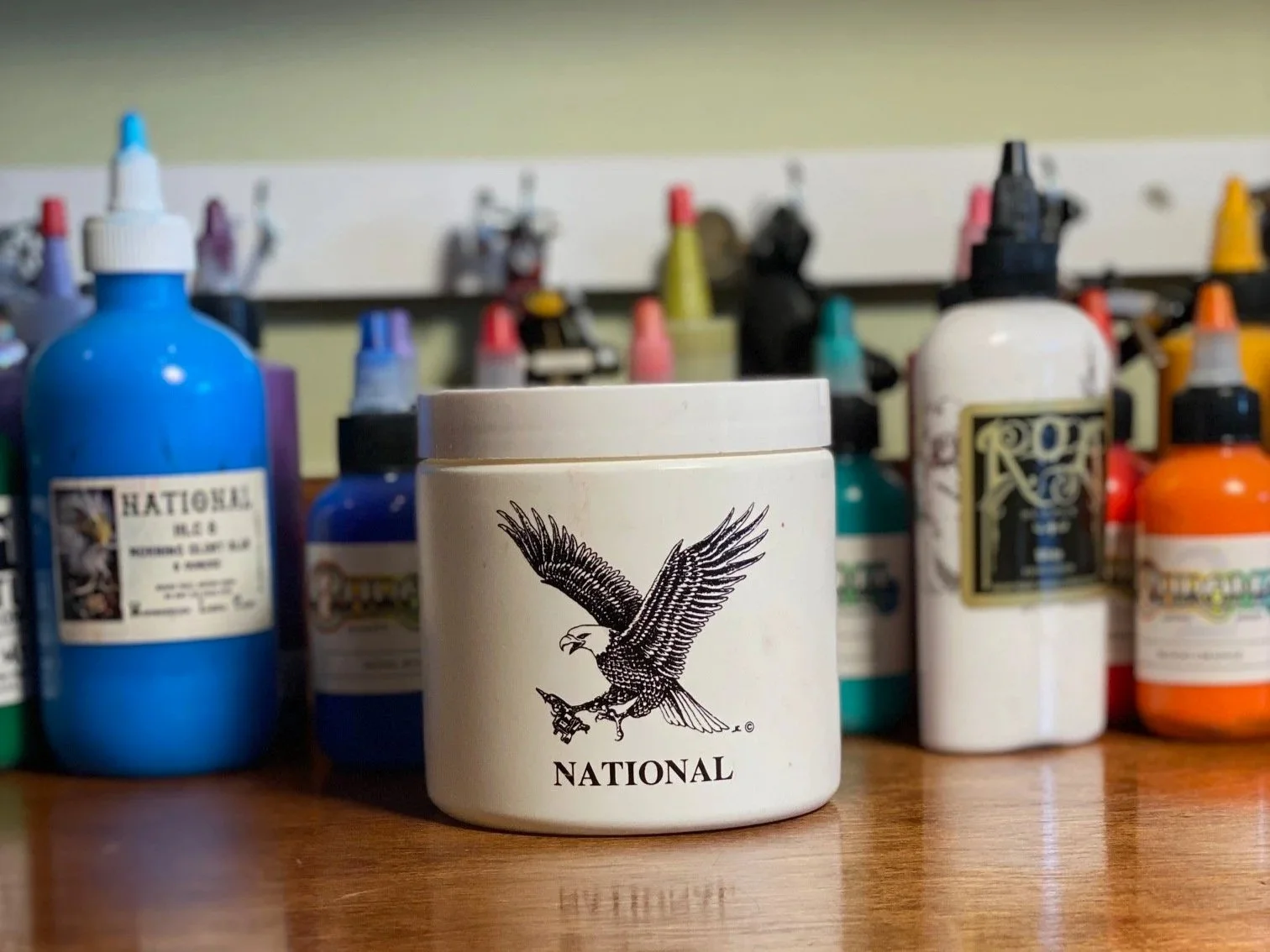
I saw it constantly so eventually curiosity won. I started buying powders. I started with brands like: Northwest Pigments, Rock of Ages, Spaulding & Rogers, & National.
I started mixing my own pigments and experimenting obsessively. Some stuff worked and some didn’t. I tried different mixing solutions, ratios, and formulations while always weighing my ingredients and documenting it all.
I kept notes because I wanted to find patterns. I wanted answers!
There was only one problem:
My tattoos using these pigments didn’t always look great. They tended to heal soft, flat, and
I had become accustomed to a very specific look from modern predispersed systems.
High gloss, high saturation, and almost sticker-like color where it looked like the pigment was sitting right on top of the skin.
That wasn't what I was seeing anymore so I naturally reached the conclusion every reasonable person reaches: “These people are liars”.
I thought everyone screaming Powder is Louder was just romanticizing old materials because it felt cool, like vinyl records or Loyal to the Coil or maybe people simply liked the identity of using powders (which is also likely partially true).
Then eventually, after a lot of experimenting, I realized something incredibly annoying:
The problem wasn't the pigments. The problem was me.
I had never actually learned how to pack color properly- not really.
I realized that some of my heroes like Stoney St. Clair never had access to predispersed pigments and did just fine- maybe better! I mean, have you watched “Stoney Knows How”?! That guy isn’t having any issues packing the color fast and bright with thick homemade powder pigments. Guys like Stoney knew how to tattoo.
I always tell people that switching to powders felt like learning how to tattoo all over again.
Since I’ve been quite vocal about the subject online, I frequently get messages from other tattooers saying:
"I switched to powder and now everything looks washed-out."
I hate saying it because I had to hear it myself… Usually the answer isn't: "These pigments suck." but instead: "You need to become better at tattooing."
You know, changing tools has a weird way of exposing invisible weaknesses and I think modern tattooing occasionally confuses convenience with skill.
Not because convenience and/or “progress” is evil but because systems that make things easier can covertly hide what we never learned in the first place. Sometimes changing materials forces us to confront something uncomfortable:
We don't always need new products- we need new and deeper understanding.
Powders Want To Be Tattooed Differently
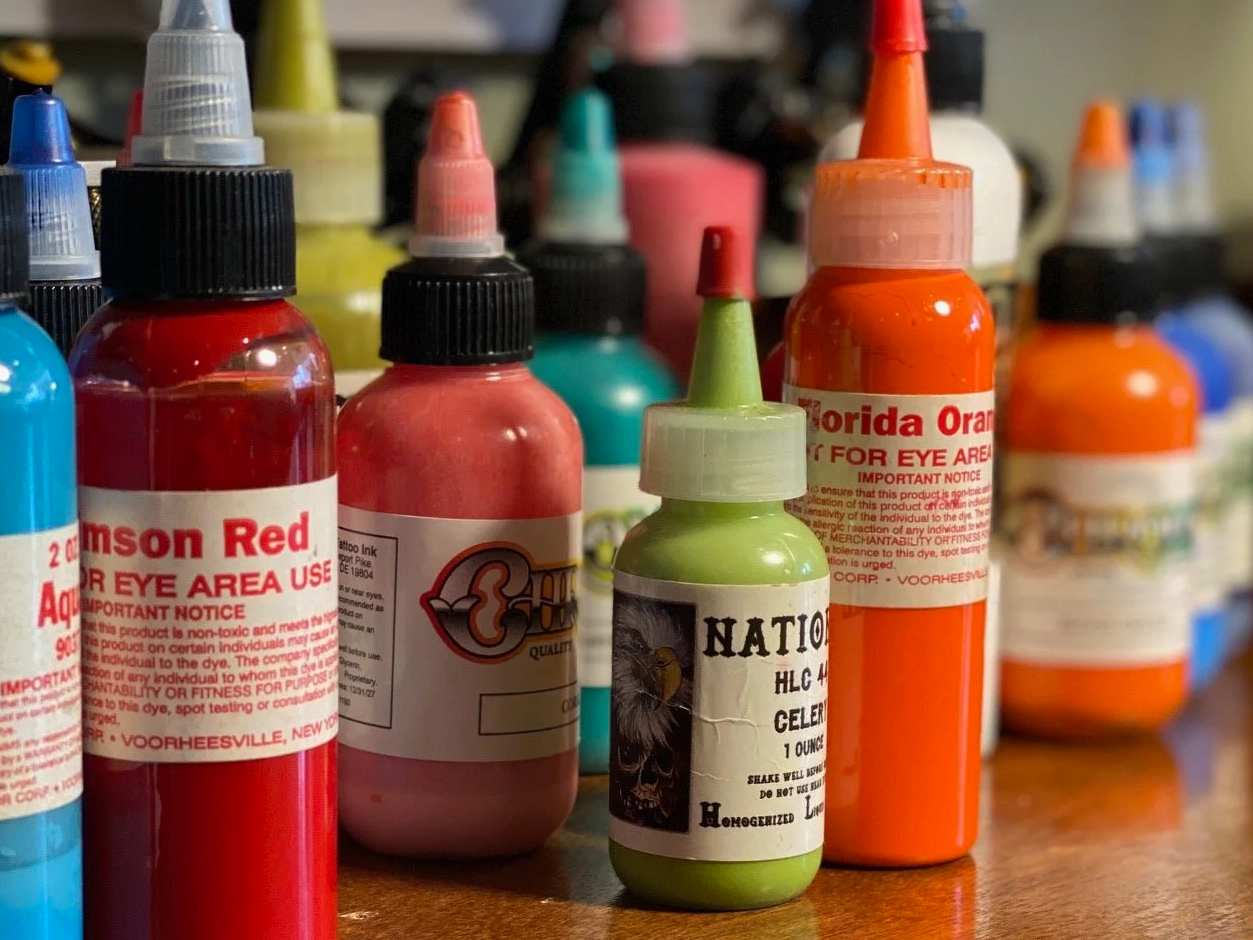
The hardest lesson for me to learn was that powder pigments weren't failing me, but instead asking for something different. I had spent years developing techniques around modern predispersed inks and, without realizing it, I had built my entire system around the behavior of those materials. Things like my: machine tuning, needle groupings, hand speed, and the like.
Powder pigments often reward a different approach. Namely, heavier pigments may require more deliberate packing, specific colors such as yellow demand more patience, machine tuning matters more, steel tubes become WAY superior to plastic, your needle choice can be more strategic, and ultimately: technique matters the most.
Simply put, the ink is no longer doing as much of the work for you.
What Actually Helped
Over the next couple of years of continual experimentation I started noticing a few things.
First, textured mags seemed to perform noticeably better with thicker pigments.
Guy Aitchison discussed carbon steel needles years ago in Reinventing the Tattoo, and my own experience has largely mirrored his observations. Carbon steel has a slightly pitted surface under the microscope compared to modern polished pins.
Unless you’re making your own needles, the quickest switch would be to order some textured mags from Blackclaw or Lucky Supply and give those a try.
The additional texture seems to help carry and release thicker pigment more effectively. I also found that machine throw matters far more than I originally realized.
A short-throw machine that worked beautifully with certain predispersed inks didn't always produce the same results with heavier powder-based formulations. Also, something with a “snap” at the end of the stroke is superior here in my experience such as a coil/hybrid/Kubin. A pen is probably not going to be able to do it- sorry man!
Recently Asa Castle made an excellent post discussing exactly this topic and how machine setup influences pigment delivery. Check it out here:
https://www.instagram.com/p/DN_tzSkD1q7/
So What Is “Predispersion” Actually Doing?
The answer is engineering.
One of the biggest mistakes I made early on was assuming that tattoo ink was simply pigment mixed into liquid.
But modern predispersed inks are often much more sophisticated than that. The pigment itself is only part of the story. The real science is happening in everything surrounding the pigment.
A Simple Explanation of Predispersion:
A predispersion machine is essentially a giant microscopic rock crusher. The machine takes pigment particles and subjects them to tremendous
mechanical forces until they become extremely small and evenly distributed throughout a liquid.
The resulting pigment is easier to tattoo with, settles more slowly, and tends to flow more consistently- but those advantages don't come for free. Additional dispersants, surfactants, stabilizers, and sometimes acrylic binders are often required to keep those tiny particles suspended and workable.
“The Invisible Helpers”
As I just mentioned, once pigments have been dispersed, manufacturers can add ingredients whose job is essentially to make everything “behave”.
These ingredients may include: Surfactants, dispersants, humectants, Polyethylene Glycols (PEGs), Polysorbates, stabilizers, resins, and other binders.
I'm not presenting these as inherently good or bad.
Many of them exist because they solve legitimate problems (although some of the problems I’d categorize as “attempting to fix what was never broken”).
They can help:
Reduce settling
Improve shelf stability
Improve flow
Improve consistency
In other words:
They make the material easier to work with and so here we are: predispersed inks are considered “normal” and “superior” because modern tattooing is entirely dependent on convenience for the tattooer over everything.
Why They Feel So Different
This was one of the realizations for me:
Powder pigments often require the tattooer to manage the material.
Predispersed systems often manage the material for the tattooer.
That's a huge difference, right?
A predispersed ink may:
Stay mixed longer
Flow more consistently
Release from the needle differently
Enter the skin differently
Require less stirring
Require less shaking
Many artists experience those benefits every day without ever realizing what's creating them.
They simply conclude: "This ink tattoos better." And sometimes that's true.
But often what's actually happening is that chemistry is doing a tremendous amount of work behind the scenes.
Side Quest: Why Do Predispersed Inks Dry Out Faster?
One thing I noticed after years of switching back and forth between systems was that many predispersed inks tended to dry-out in the cap more quickly than my powder pigments.
Predispersed formulations frequently contain additional: surfactants, dispersants,humectants, acrylic binders, and/or resins.
As the water evaporates, those additives can leave behind a gummy, sticky film.
It's one reason you'll sometimes notice a skin forming on the surface of certain predispersed inks sitting in a cap for a while.
Again, the point isn't that one approach is universally superior. All I know is that I have less issues with my Chroma ;)
The point is that every advantage usually comes with tradeoffs. At the end of the day, your tattoo ink hardening into a plastic puck sucks. It wastes you money and probably sets-off some alarm bells for your clients. Not exactly ideal.
How did resins end up in tattoo ink?
One thing that surprised me during my research was discovering that many of the ingredients in modern tattoo inks didn't originate in tattooing at all. They originated in other industries such as coatings, paints, printing, cosmetics, and industrial pigment systems.
Resins and binders are a good example of this.
In simple terms, a resin is often added to help create a more stable and workable pigment suspension. Think of it as part of the “support structure” surrounding the pigment itself.
Different manufacturers use different systems, but many modern resin technologies trace their roots back to acrylic chemistry.
And that's where tattooers often become divided- myself included. Some artists love the handling characteristics these systems provide or the finished glossy look (the shininess of the resin in the skin).
Sometimes, the addition of resins might make sense. Examples might be: for large fields of light greywash in b&g realism- the additional body provided by acrylic resin might help you get a more even result. Also, if you’re tattooing a color portrait of Prince on a pasty thigh- the client is probably expecting a sticker-like result more than a long-lasting “bold will hold” tattoo.
More on the “Glossy Look”.
Certain modern color tattoos have an almost sticker-like appearance. They're extremely saturated and can look extremely smooth and bright- almost as if the color is sitting on top of the skin.
Many artists love this look. Clients often love this look. It looks just like the Photoshopped tattoo references that they found on Pinterest! Perfect!
To be fair- it does look impressive but after spending years around older tattoos and seeing old guys walking around with healed powder tattoos from Bob Shaw and the like, I started wondering whether modern tattooers had simply become accustomed to that appearance?
In other words: are we seeing better tattooing or are we seeing a different aesthetic created by different materials?
That question doesn't have an easy answer but I think it's worth asking.
You get to choose your materials and your finished look- just acknowledge that there may or may not be drawbacks.
The Patchy Fading Question
One of the most common observations you'll hear from artists discussing different pigment systems is that certain modern formulations seem to fade differently than older powder-based systems.
If you’ve seen an old timer walking around with a Pinky Yun tattoo (I have), you’ll notice that indeed the colors have faded a bit but in an even and smooth manner. Some tattooers have reported that predispersed ink can fade in a: spotty, patchy, uneven way leaving islands of missing color in sections of the same color in the same tattoo.
Experientially, I have personally seen examples of this fading especially in the usual suspects- reds, oranges, yellows, and browns.
But this is where things become complicated. Tattoo longevity is influenced by:
pigment chemistry (how lightfast is it)
particle characteristics (does it tend toward negative reactions?)
UV exposure (Northern Europeans don’t notice as much fading as Aussies for example)
application techniques
Aftercare from the client
Client's immune activity
individual biology
Trying to isolate a single cause is extremely difficult.
Could additives contribute? Possibly. Could application technique contribute? Most Definitely. Could multiple factors be interacting simultaneously? Almost certainly.
The honest answer is that we simply don't know enough to confidently assign blame to any single ingredient but we can stay alert to the way the tattoos that we’ve applied have healed and faded thus far.
Pigment Ratios
There’s one more little math problem to solve. So if powder pigments are just pigments + a carrier solution that is not microdispersed into a solution- that means that you can only put so much carrier solution into the mixture before the product itself doesn’t contain enough pigment per puncture to saturate well. Makes sense right?
If your carrier solution were Distilled water for example (wouldn’t recommend), then water is clear and you can only water your pigment down so much until you’re basically tattooing water into the skin instead of color. If you let your powders sit over the weekend- you can literally SEE the ratio of powder to carrier after it settles. More pigment than carrier for sure!
Predispersed solutions, on the other hand, do indeed have even a little bit of color everywhere (it is practically a colored carrier solution). But where in this math problem is the room for the additional surfactants and resins, etc? The answer is that it tends to eat-into the PIGMENT part of the ratio.
Let me make this very clear with a simple statement. Predispersed solutions have less actual color per capita than powder solutions. You know what’s a lot cheaper than packing your inks with as much color as possible? Packing them with as many additives as possible…
I will discuss surface area of pigment particles and its effects on fading/lightfastness some other time but this is also a factor.
So What Do I Actually Recommend?
After all these years of reading labels, experimenting with pigments, mixing my own powders, studying MSDS, tracking chemical index numbers, buying pigments just so I can read the label on the side, and trying to understand what's actually happening inside these bottles, I've arrived at a pretty simple conclusion:
Balance beats dogma.
I don't think every predispersed pigment is bad. I don't think every powder pigment is automatically superior.
I don't think tattooing needs another tribal argument.
What I do think is that tattooers should understand the materials they're using. That's it.
If you live in a place with less sunlight year round- maybe it’s not such a big deal for you. If you prefer powders, great- but you better know how to put them-in!
Understand their strengths and weaknesses too.
The goal isn't choosing sides. The goal is becoming harder to fool.
You know you don’t have to take the bait from some of these corporate entities telling you that the only way to make a good tattoo is to take their shortcut while ignoring all of the drawbacks to the same product!
Half of the time, if their ads were honest, they’d say “it fades faster than powder but will actually go in if you’re using a bugpin cartridge in a pen machine and it’s loaded-up with tons of crap that you wouldn’t dare apply to your children’s skin. But we assume that you want fast easy money and this is how you get it. Don’t learn to tattoo better and certainly don’t give your money to actual tattooers that make their own pigments- it’s dangerous to our bottom line!”
Practical Takeaways TLDR;
If I were starting over today, these are the things I'd pay attention to first:
Pay attention to CI numbers.
The Chemical Index system tells us far more than the marketing label on the bottle ever will.
Many tattooers spend years comparing brands while never realizing they're often comparing the exact same pigments. Understanding the pigments themselves will teach you more than blindly becoming loyal to a certain brand.
Research lightfastness whenever possible.
Not every pigment has the same resistance to UV exposure and long-term degradation.
When I have concerns about the durability of a particular pigment (red, yellow, orange, brown, etc), I always lean toward proven powder-based alternatives.
As a wise man once said, “Knowledge is power.”
Pay Attention To Your Machine Setup
Many artists blame pigments for problems that actually originate in their setup. Mess with your: needle choice, throw, hand speed, and packing technique (try staying in one place a little longer than you’re used to).
Asa Castle has done some excellent writing and demonstrations regarding machine setup and thicker pigment systems, and I'd encourage artists to explore his stuff. I personally use his pigments and have tattooed them in my own skin with great results.
Textured magnums deserve more attention.
For years I've found textured mags particularly helpful when working with thicker pigments.
Guy Aitchison discussed similar ideas years ago in Reinventing the Tattoo, and my own experience has repeatedly pointed me in the same direction.
The right needle can completely change how a pigment behaves and force you to slow down.
Shake your bottles. Seriously. Especially colors containing white. Especially mixed colors. Physics doesn't care how expensive the bottle was.
Also, with powders, when you dip- give your needle a little swirl into the cap to keep it continually mixed. Repour when necessary- it’s worth it.
Support artists who make pigments.
One thing I genuinely appreciate about the powder pigment world is how many of the companies are still deeply connected to tattooing itself.
Many are owned and operated by tattooers who actually use these products every day.
Companies such as:
Magic Pigment
Castle Pigment
Waverly
Chroma
Legacy
Luna
Nathan Marcus
Philadelphia Eddie's Tattoo Supply
Raw Pigments
Sombra
have all contributed to keeping knowledge, experimentation, and pigment-making alive within tattooing itself.
Whether you choose their products or not, I think that idea alone is worth supporting.
The Most Important Thing
After ten years of experimenting with powders, I've become convinced of one thing:
No ingredient can replace good tattooing. I think that if you handed Filip Leu a Micky Sharpz right out of the box- he could make it do whatever he wanted- including packing powder!
Ultimately, regardless of what pigment system you're using, eventually the same rule applies:
Pack it like you mean it…
With much love and sincerity,
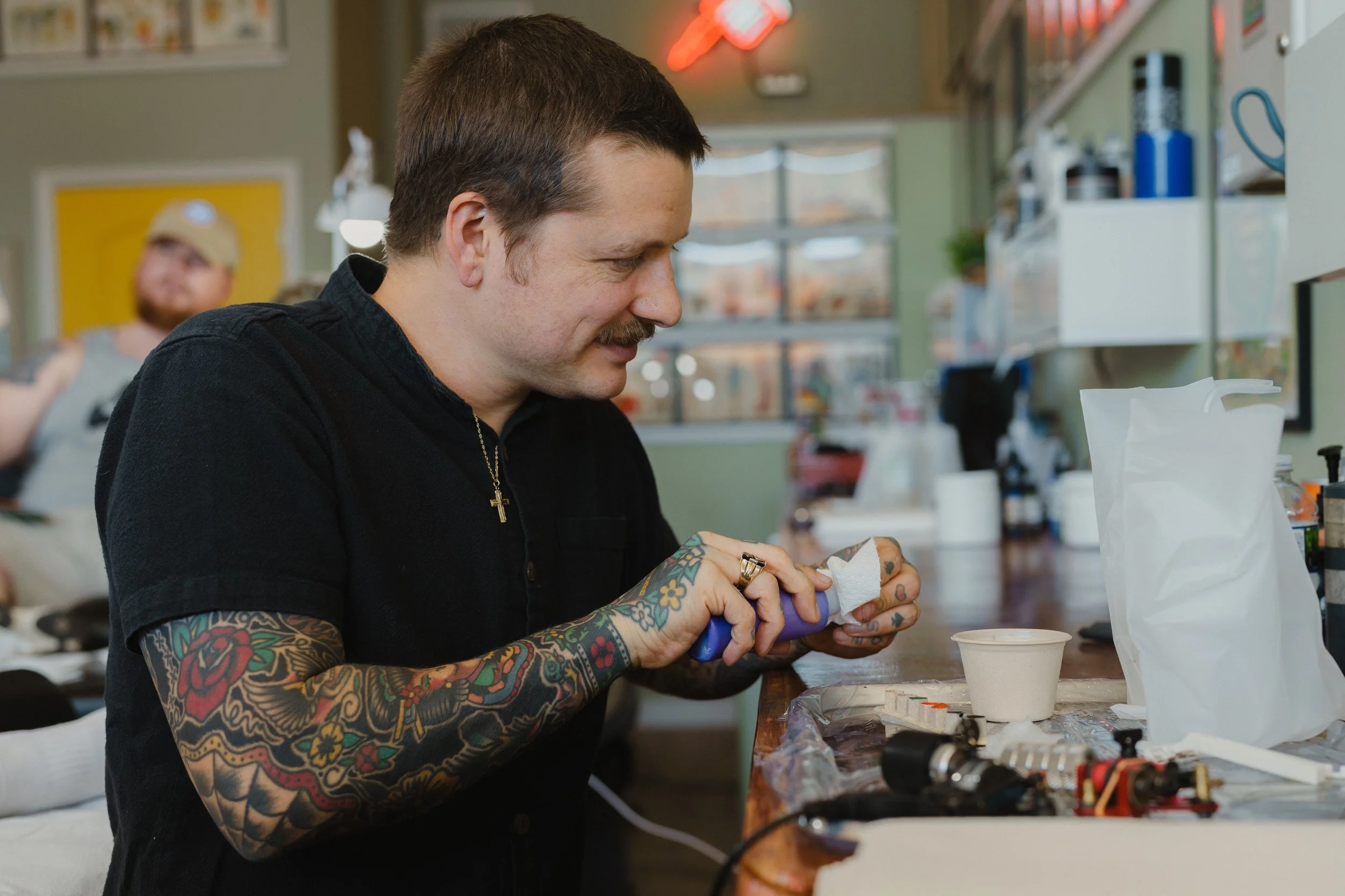
Jordan Brill (The Upgraded Tattooer)